
29 October 2026
Words: Josefina Salomón Photos: Patricio A. Cabezas Illustration: Jonathan Gómez
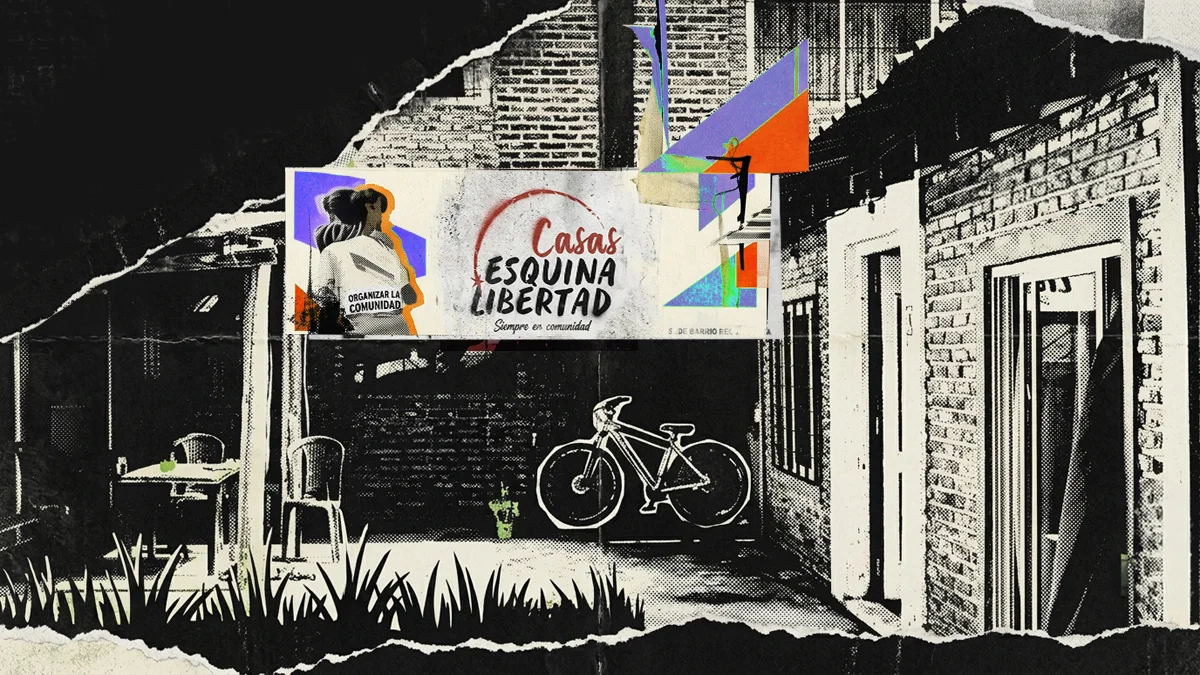
It is drizzling and the streets of Merlo, in Argentina’s Greater Buenos Aires area, are nearly empty. All but one, where a group of people of all ages briskly walks towards a red-brick house. Casa Esquina Libertad has a large grassy courtyard and a high wall covered with a series of murals painted by the team and local residents.
People are coming to participate in a group therapy session, part of a comprehensive programme addressing problematic drug use.
Bárbara Montenegro, one of the centre’s coordinators, greets people individually. She knows each person well and remembers even the smallest details they have shared about their lives – the good and the bad.
The community centre was born after a group of women who had organised a community soup kitchen during the Covid-19 pandemic noticed an increase in drug use among young people in the neighbourhood. It has been operating since 2020 under an agreement with SEDRONAR, Argentina’s national secretariat for drug policy.
As soon as it opened, word spread through the neighbourhood and beyond, and people began arriving, drawn by the community-based, holistic approach on offer.
“For me, coming here is about looking after my health. If I have a stomach ache, I go to the doctor, and if I’m struggling with the ‘other stuff’, I come here. A friend recommended it,” says one young man receiving treatment.
Bárbara is proud of the kind of care they provide.
“We approach drug use within the framework of the national mental health law, rather than from an abstinence-based model that sees punishment or confinement as the only answers. We understand that inpatient treatment is a necessary tool for some people, but we think it should be the last resort,” she explains.
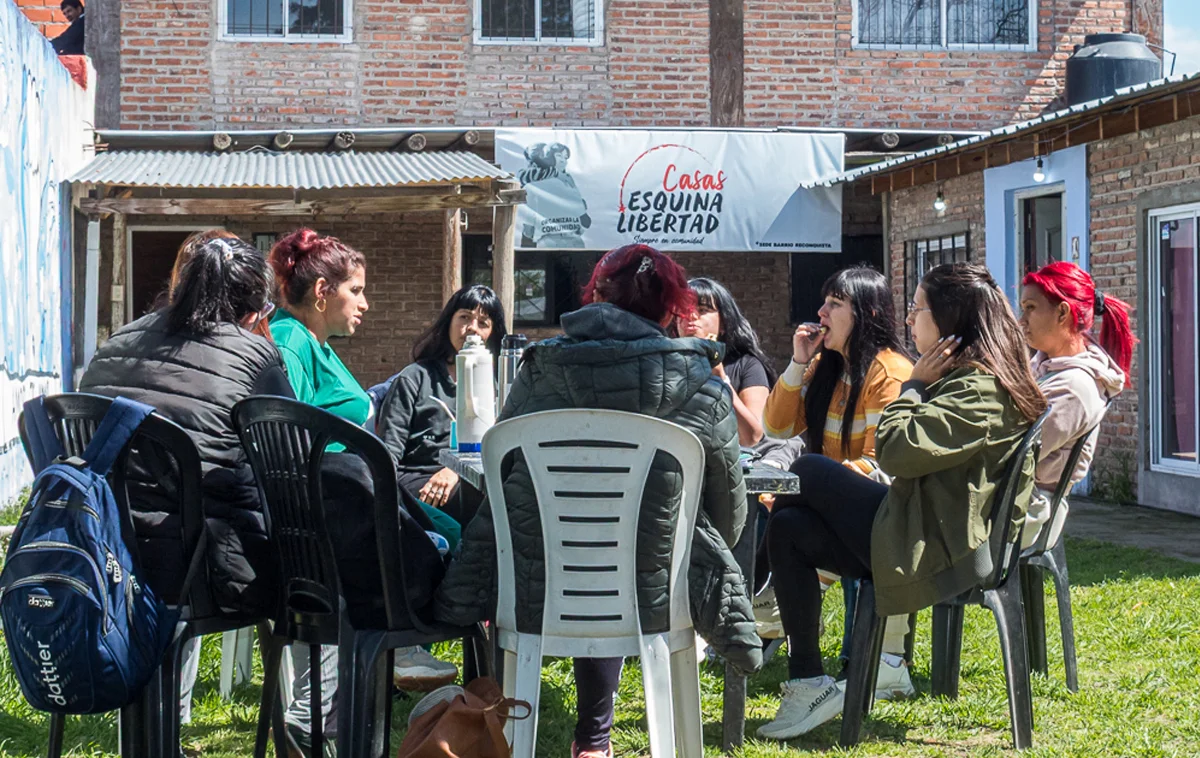
The team includes psychologists, lawyers, workshop leaders and volunteers. They also lead community visits, speak to mothers and soup-kitchen coordinators, and build networks to identify people who could benefit from the kind of programmes they offer. Referrals come from courts, health centres, hospitals, government agencies, friends or family members, among others. Many people just show up.
“Our approach is more personalised because there isn’t one treatment that works for everyone. We work through groups and collective support, with an emphasis on listening. That helps people become a source of support for others. We welcome you with a mate, some tortas fritas, a smile and plenty of listening. That makes a huge difference: having an open space where people can come and go, and where they can bring their children.”
They work on the basis that support is a long-term process. “Relapse is part of the process; this isn’t something that suddenly gets cured.”
“It’s about helping people recognise for themselves what is harming them and understand how they can change those habits to reduce the risks and reduce their drug use, because we know that drug use isn’t going to disappear just because someone comes here for two days. The important thing is to gradually reduce that use and think about strategies that can help them over time. There are no magic answers. We live alongside drug use and substances,” she explains.
For decades, Argentina occupied a marginal position on the regional map of drug production and trafficking. But in recent years, that has changed dramatically. The country’s strategic location between producing countries and some of the world’s most lucrative markets, in Europe and Oceania, combined with factors including efficient transport routes and widespread corruption, has turned it into a key hub for production, storage and distribution.
Being at the centre of this map also means drugs are increasingly available, which in turn has fuelled an explosion in the consumer market.
“There is a normalisation of drug use. We see many families where both parents and children use drugs. The most common are alcohol and cocaine, increasingly accompanied by other substances, but almost always alongside cocaine,” explains Michel Apioli, one of Casa Esquina Libertad’s psychologists.
At the same time, sweeping cuts to social programmes (including food supplies for community kitchens) as well as to education and health budgets and transport subsidies, alongside falling economic activity and rising household debt since President Javier Milei took office in late 2023, have had a particularly severe impact on the most vulnerable communities. The government says the cuts were necessary to balance the public finances. In working-class neighbourhoods, the impact of the measures is felt everywhere. Among other things, the state’s absence has created space for criminal groups to step in and fill key gaps.
Experts told La Veta that when the state withdraws from its social role, and its policies create greater hardship, local criminal groups identify an opportunity to exert control over territory. This, in turn, allows them to operate more efficiently, recruit cheap and compliant “labour” and gain new customers.
The same story is repeated across Greater Buenos Aires. When food deliveries stop arriving at a community kitchen, local drug dealers step in and offer supplies. Most organisations say they refuse, but “when there’s no other option, a lot of people are taking it”, several community groups said.
Carla, who works on the ground for a government agency and asked that her name be changed, puts it this way:
“There are more drugs on the streets, yes, but there have also been cuts to subsidies for community kitchens and things that affect people’s health and access to food. Living conditions have gotten worse overall, a lot of people have ended up on the streets and that contributes to people turning to drug use.”
“Recently I had a conversation with a patient that really illustrates what is happening,” she says. “He is in his twenties and told me he could find work using a delivery app. But then he said: ‘I earn this much doing deliveries, and if I sell drugs I can earn much more.’ He put it to me in purely numerical terms, and how are you supposed to argue with that? I tell him: ‘If you sell, you use.’ It’s a constant tragic trap, and with the living conditions these young people face, it’s very difficult to find a way out of it through argument.”
Bárbara says drug dealing has become increasingly visible in recent years.
“Before, you didn’t know where the dealer was. Now we do. At the house in northern Merlo, there’s a drug den just around the corner, and they know that we know they are there. In these neighbourhoods, we live alongside dealers. One, one of the dealers came to a meeting, we didn’t really know why. When the state steps back and stops implementing public policies for people, for young people, crime groups move in to occupy that space.”
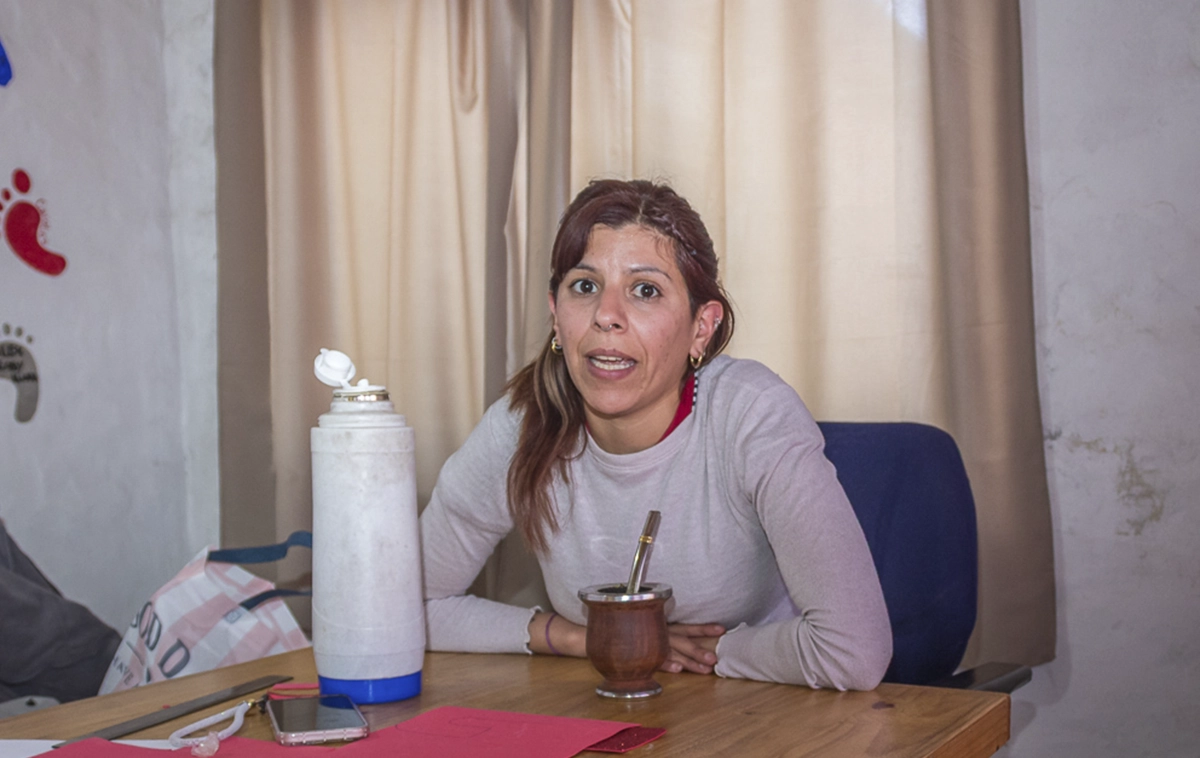
Budget cuts have been drastic across health services and particularly in services supporting people experiencing problematic drug use. Since January 2024, the government cancelled contracts with more than 30 services providing the kind of support Casa Esquina Libertad provides. Bárbara and her team continue to provide services as best they can.
“Because of the cuts, we’ve had to reduce our opening hours and the number of days we operate. We used to provide afternoon snacks, but we no longer have the resources to keep doing that. Everything is becoming much harder. Sometimes people don’t come because they can’t afford the transport, or because they have to use what little money they have to buy food,” Bárbara explains.
In other working-class neighbourhoods, the story is much the same. Treatment centres are left without professionals, unable to meet demand or provide spaces for young people with few alternatives.
The impact of the cuts is visible at the Hospital Bonaparte, the country’s main national mental health hospital specialising in problematic drug use. Located in the south of Buenos Aires, it is a sprawling complex of buildings, with inpatient wards and large green spaces.
Today, it is a shadow of what it was just three years ago.
The few patients who remain walk along the corridors of the wings that are still open, next to a “ghost” area of bedrooms that look almost new, but where beds are empty. There is a cultural centre that once hosted workshops and now stands deserted, its walls decorated with old portraits. A small group exercises in the vast grounds, surrounded by trees that have stood there for decades.
In 2025, Milei’s government ordered a drastic cut to the hospital’s budget. Despite protests, hundreds of staff were dismissed. Those who remain, many on precarious contracts, are trying to keep the service going through sheer commitment and determination.
“They’re waiting for everything to deteriorate, for it to collapse on its own,” says Pablo Catalán, one of the doctors still working at the hospital. “It’s very sad and very hard.”
Catalán says that without funding, everything becomes an uphill struggle. It limits the number of people they can treat even as demand continues to grow.
“Our patients used to come largely from excluded communities, but now people come with families, people who can no longer afford private health insurance. People from the middle and upper-middle classes. The broader economic context has an profound impact on people’s mental health,” he explains.
The economic situation and the broad cuts are also affecting professionals and what they are able to do to help others. They too are struggling to make ends meet. Most work several jobs and many are leaving the profession altogether.
Carla, from the government agency, says the problem is that the government’s drug policy is mostly focused on supply.
“They (the government) see drug use as an individual issue, and from that perspective they believe they shouldn’t have to take any action. Their focus is on punishing supply, but the reality is that it’s very difficult to think about this issue and health in general in individual terms. That’s not how it works,” she says.
When national services are unable to provide treatment, people who need help return to services in their own neighbourhoods, putting even more pressure on those trying to meet demand with fewer resources.
“It shouldn’t be like this,” says Bárbara, who also works several jobs to make ends meet. “Health is a basic human right.”
“How do I keep going?” she asks, repeating our question aloud. “It’s a decision, a commitment to fighting for mental health all the time.”
“It’s difficult, but we carry on,” she says, taking a deep breath, finishing her mate and preparing to go into the next session, where the group is waiting for her.
