
“How do you make ends meet?”
It was the most basic question, but also the most important.
The woman was sitting in the living room of her home. For nearly two years, she had been waiting there to be sentenced in a case of small time drug dealing. The judge had allowed her to spend this time under house arrest because she is hr young daughter’s main career. The judge, however, did not allow her to work or have any kind of bussiness at her house. She did not receive any support from the government either, from the very few social programmes that survived Javier Milei’s chainsaw.
Other women in similar circumstances had already gone back to selling drugs, she said. Local drug dealers, who have expanded their influence across many marginalized neighbourhoods by offering people in need everything from jobs, loans and food, are beginning to emerge as the only option in an economic landscape that, for many, has gone from terrible to desperate.
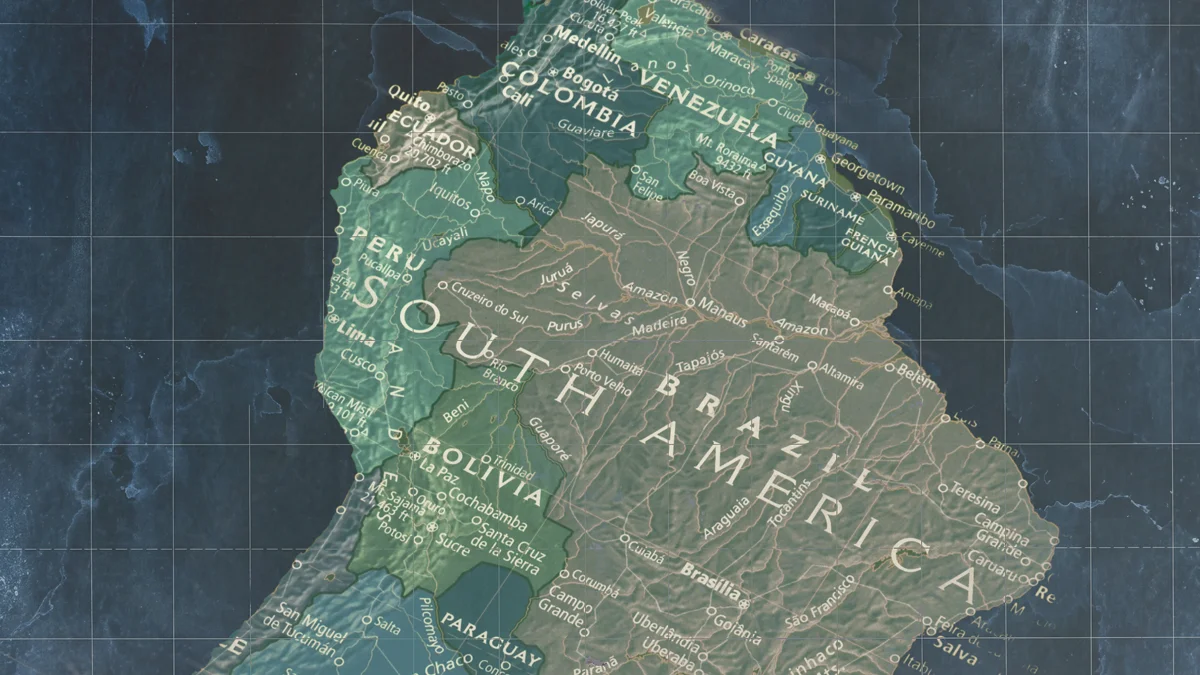
This particular story comes from Argentina’s Buenos Aires province, but it could have happened almost anywhere in Latin America.
It is one of those individual stories that helps explain the region’s most complex transformations.
For decades, Latin America has been the stage for struggles over resources, territory and influence. Today, those struggles are taking new forms and acquiring new dimensions.
Institutionally weak governments, increasingly marked by authoritarian practices, are promoting smaller states in terms of their social role, while expanding their punitive security strategies. Old and new economic powers are competing for control of resources, including natural resources, which are becoming increasingly scarce. Criminal organisations are taking advantage of these disputes to create new ones, seeking to control territory to expand their highly lucrative businesses.
Amid this maelstrom, grassroots social organisations and community movements of all shapes and sizes in peripheral areas continue to fight back. They are trying to stem the damage caused by the erosion of the state, protect their territories and propose alternative visions of possible futures.
In this chaotic landscape, accelerated by new technologies and profoundly affected by disinformation and toxic narratives, none of these elements can be analysed in isolation. It makes no sense to think about territorial control by criminal groups, large or small, without examining the role played by the weakening of state institutions, or the effectiveness of the resilience strategies developed by communities themselves.
Geopolitics, economics and human rights are part of the same conversation, and it is not an abstract one.
That is where La Veta comes in.
We look to try and understand the dynamics and consequences of the new struggles for power that are reshaping Latin America.
Our approach starts from a simple premise: it is impossible to understand these political, economic and criminal transformations without looking at what is happening in the communities caught in the middle of them, their projects, cooperatives, support networks, alternative economies and the forms of collective protection they put in place to survive.
It is essential that these experiences, which are generally overlooked, become central to the conversation about Latin America’s present and future.
Our journalism is deeply local and, at the same time, regional. It is journalism that can connect the dots between the new dynamics unfolding across the region and investigate the futures that may lie ahead. Journalism that reports on power without losing sight of the people over whom that power is exercised.
We do investigative, analytical and solutions-focused journalism through features, investigations, explainers, analysis, perspective pieces and newsletters, produced by some of the region’s most experienced and knowledgeable experts, in partnership with others in the media and academic worlds who are grappling with some of the defining questions of this moment, as event unfold and from the ground.
Thank you for joining us on this new journey!
