
15 October 2026
Words: Josefina Salomón Photos: Patricio A. Cabezas Illustration: Jonathan Gómez
At first glance, Mariana’s* father’s house, located in a low-income neighbourhood on the outskirts of La Plata, the capital of Buenos Aires province, looks much like any other home in the area. A black metal gate separates the street from a small front garden, where a white car sits alongside a dozen half grown plant pots.
A huge white dog comes bounding towards us as soon as he hears the doorbell, which rings loudly through the small house. Behind it comes a little girl in a pink-and-red outfit, her long dark-brown hair tied into two perfect plaits.
“My mum can’t come outside!” she shouts as she holds back the dog, who welcomes us with loud barks and high jumps.
Amarilis Alayo, a leader of the Movement of Excluded Workers (Movimiento de Trabajadores Excluidos, MTE), a grassroots social movement that operates across Argentina, and a representative of the state-run organisation responsible for supporting people who have been released from prison, laugh. They hug and kiss the girl while carrying bags of vegetables, fruits and non-perishable food, carefully selected from the boxes in the boot of the car we have travelled in.
They have been to this house several times before.
Inside, Mariana, 34, the mother of the little girl with the plaits, welcomes us with mate, the typical South American drink.
Since January 2025, these walls have become her prison. She is waiting for the courts to rule on the charges brought against her two years ago of possession of drugs for sale.
“It was financial necessity that led me to do what I was doing. I was on my own, I couldn’t find a job and, unfortunately, I had no other resources, no options. Sometimes life’s circumstances push you into doing things that aren’t right, but sometimes you feel you have no other choice,” she says.
She spent six months in detention before the court granted her house arrest, a measure available to people who have others in their care, generally mothers who are the heads of single-parent households.
Mariana has been mostly confined to her home. There is a small room that serves as both kitchen and dining room, the bedroom she shares with her daughter, and another room where her elderly father sleeps. He has health problems. There is one bathroom and, at the back, a small patio.
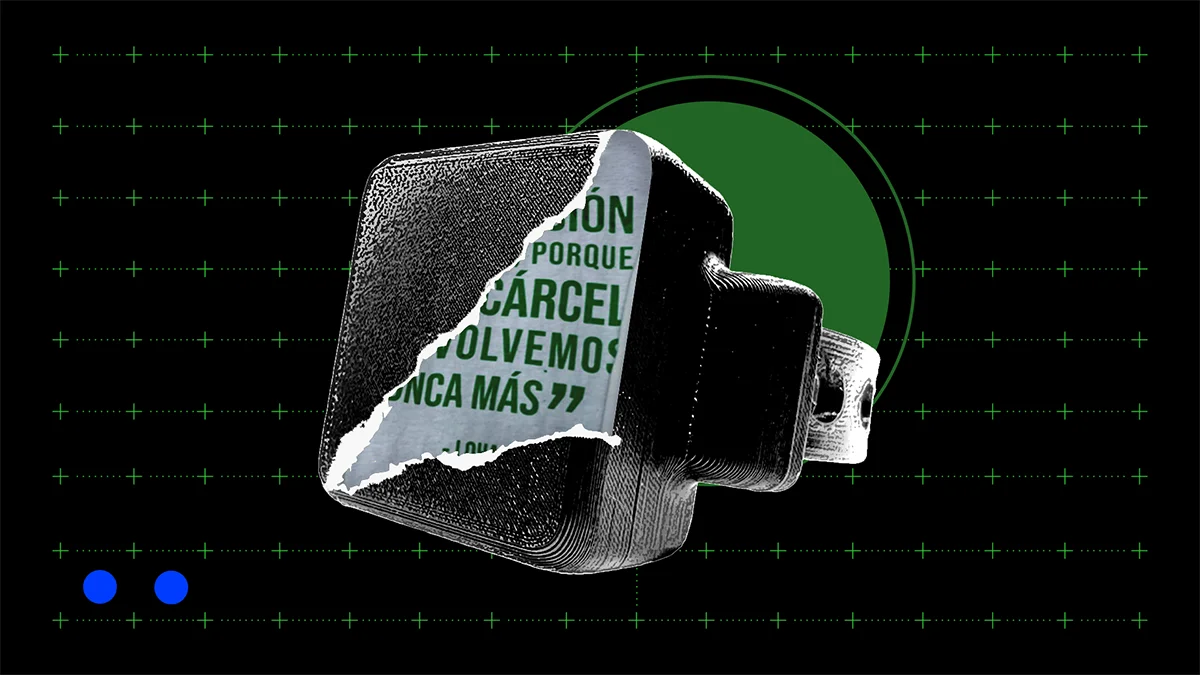
Under house arrest, the home becomes a fixed perimeter. Mariana’s movements are monitored through a black plastic ankle tag she wears beneath her trousers. “Always very tight, so tight that it hurts,” several of the women we visited said.
If Mariana leaves the permitted area, a device resembling a land phone, connected to the monitoring system in the house, starts ringing. She must quickly confirm that she is there by sending a photograph as proof.
But Mariana says the phone can ring at any time. “At two or three in the morning, whenever. It drives me crazy.”
If she fails to respond, or something goes wrong, a police car will come to her hourse to check she is there.
If she needs to take her daughter to school or to a medical appointment, she needs to ask the court for a special permission. Each request has to be processed through the court by her lawyer.
“I depend on someone for everything. There’s a little shop next door that I can call, and the woman who runs it, just because she knows me and knows my situation, will bring me something if I need it.”
“Sometimes my daughter asks me to take her to the park. She cries and I get desperate. I constantly have to explain to her that I can’t. At weekends, it ends up being just the two of us here, locked up inside. I can’t always ask people for favours.”
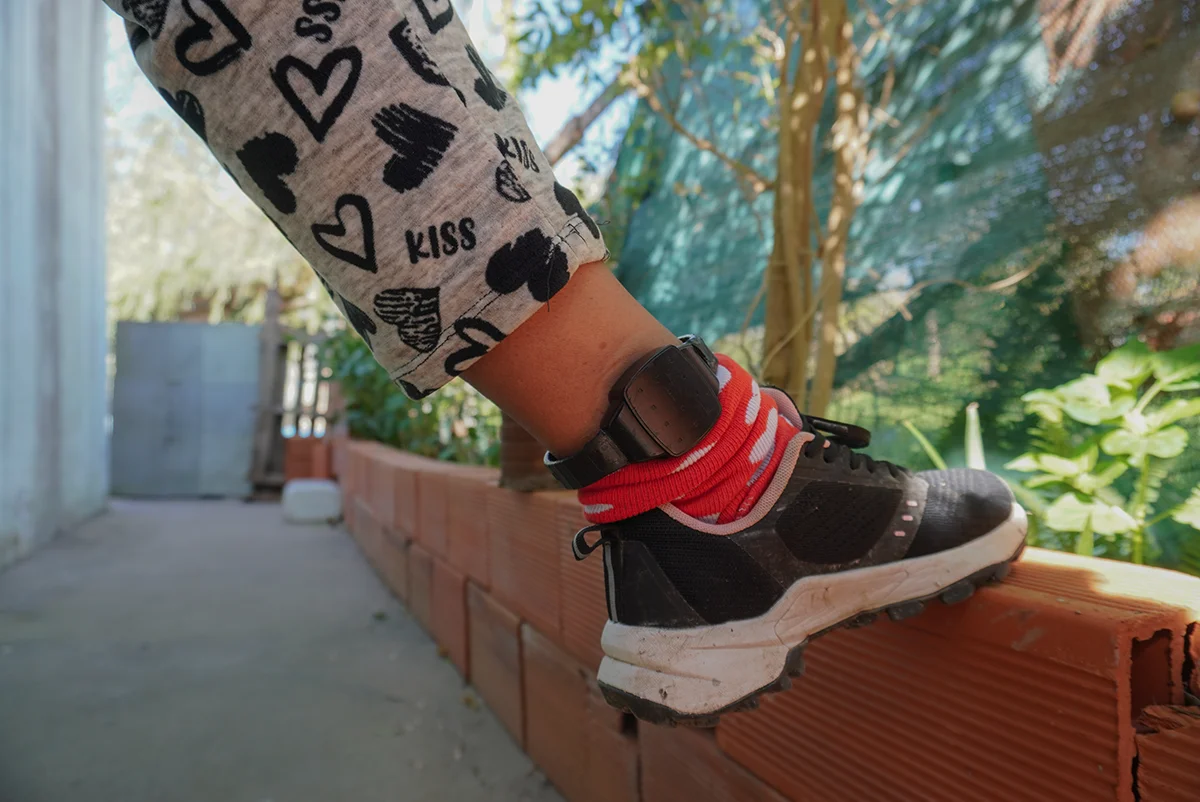
A woman on house arrest shows the Electronic ankle monitor. ©Josefina Salomón.
Mariana speaks calmly. Between sips of mate, she makes the occasional joke and checks that the potatoes cooking in the oven aren’t burning. Her voice drops when she talks about the difficult times we went through: the periods of depression and the strategies she uses to stay strong. She gestures with her hands as she speaks, making the light coming through the kitchen-living room window catch the shine of her perfectly manicured nails, one of the few remnants of a nail business she was forced to shut down because she could no longer afford supplies.
Under Argentine law, when someone is deprived of their liberty, the state is responsible, as part of the process of resocialization, for providing access to education, employment and opportunities to maintain family ties. This also applies to people serving house arrest.
But Mariana says she was told the nature of her case prevents her from running businesses that involve selling products or services.
“I had a business selling cleaning products for a while and it was going well. Then I started selling sandwiches, but I had to close both because of my case. My biggest problem is that I can’t earn an income to support my daughter, and the state neither helps me nor lets me work.”
Mariana says she receives no government welfare or other support. Her biggest challenge is making it to the end of the month without being able to earn money.
“I’m struggling pretty badly with my economic situation. I’m very depressed. I feel like they (the government) neither help me nor let me do anything. I know I made a mistake, but I’m trying to do things differently. If it weren’t for my father and for the women in the organisation, I don’t know what would happen to us.”
***
Stories like Mariana’s are becoming increasingly common in Argentina, where the imprisonment of women accused of drug possession and low-level drug dealing, as well as the use of house arrest, have risen in recent years.
According to the latest available figures, 3,689 women are serving sentences under house arrest in the country. Although women account for just 4% of Argentina’s overall prison population, they make up 29% of people serving their sentences under house arrest.
These women represent the weakest link in the supply chain feeding a market that continues to grow, as Argentina takes on an increasingly significant role in the region’s criminal landscape and drug market.
But this alternative to prison, which on paper was designed to ease pressure on overcrowded jails, now faces new challenges amid cuts to social programmes and a broader deterioration in economic conditions under the government of Javier Milei.
Since taking office in late 2023, Milei has pursued a programme of sweeping state reform, cutting social programmes and public services that have particularly affected Argentina’s most marginalised communities.
While some sectors of the economy, including mining and agriculture, have recorded growth, mass factory and business closures, increasingly precarious employment and falling purchasing power have created a vicious cycle affecting the population as a whole, and particularly people living in low-income neighbourhoods.
For women serving house arrest, experts say, this can mean anything from being trapped at home, living with an abusive partner to becoming vulnerable once again to the same activities that led to their imprisonment in the first place.
Macarena Fernández Hofmann, coordinator of the criminal policy and violence in detention team at the Centre for Legal and Social Studies (Centro de Estudios Legales y Sociales – CELS), says alternatives to prison are generally a positive policy, but warns that “they cannot come at any cost”.
“If house arrest is going to be used, it has to be accompanied by policies that don’t push women into greater vulnerability. How do you do that? You start by having policies that provide economic support to these families,” she says.
“Prisons are full of women accused of selling drugs to survive, while the real drug traffickers are walking free,” says Amarilis, from the MTE, before beginning to list cases of people she knows in this situation. The list is long.
Experts say the rise in low-level drug dealing is linked to Argentina’s worsening social and economic conditions and cuts to social programmes designed to support vulnerable communities.
Andrea*, 53, lost her job cleaning houses just under two years ago. After months of unsuccessfully looking for work, she accepted an offer from a local dealer to sell drugs. It did not last long. She was soon arrested and, after a year in prison, was granted permission to serve her four-year sentence at home, where she cares for her 86-year-old mother, who has a disability. She now lives with her mother, her brother, two nephews and a great-nephew. Two of them have lost their jobs and there is not enough money to go around. Finding work is harder than it used to be.
“Being in prison was hell, but now that I’m at home I don’t have any support from anywhere. There’s no food, no support, nothing. I was offered two small cleaning jobs and I spoke to my lawyer. She asked for all the woman’s details and they said she had to go through the process (to become a sponsor) herself, and that opportunity fell through,” she says, crying.
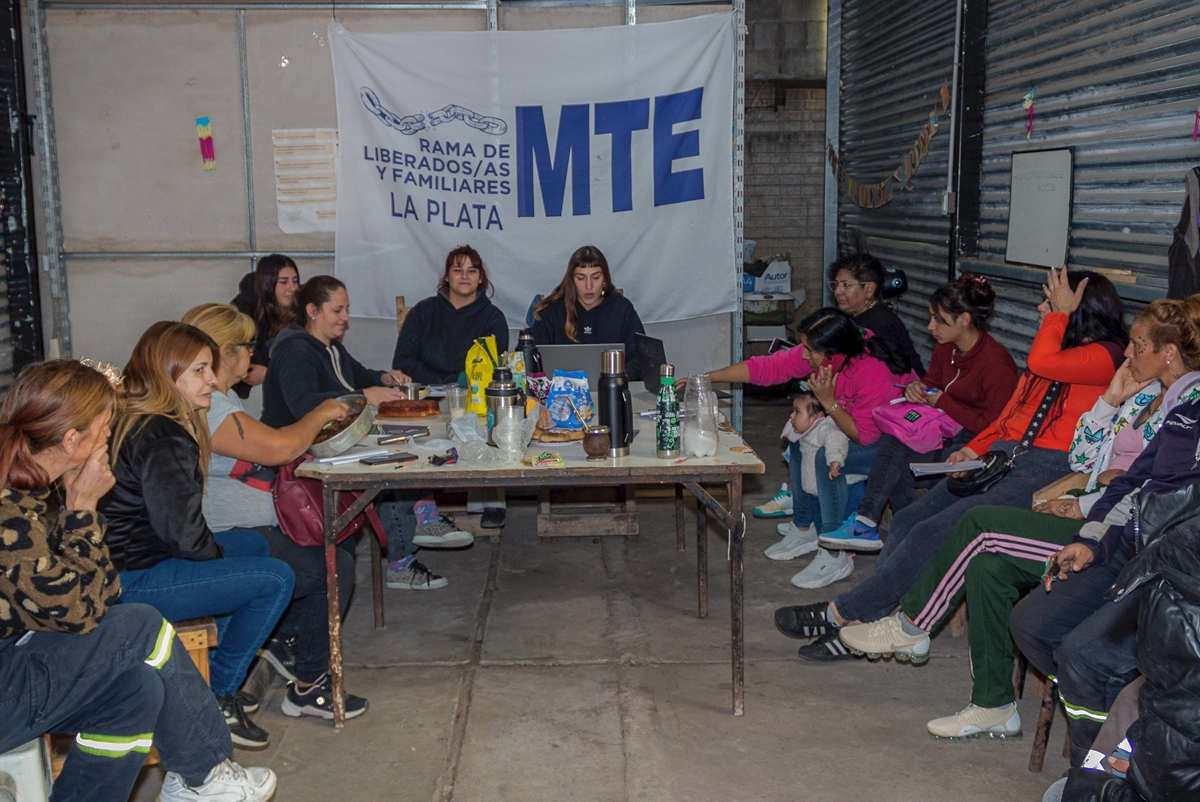
Workshop for women in house arrest and those who have experiences time in prison, organize by the Movimiento de Trabajadores Excluidos in La Plata, Argentina. ©Patricio A. Cabezas.
Amarilis Alayo, one of the MTE’s leaders, arrived in Argentina 30 years ago with her mother and younger sister. She studied nursing and worked in a range of jobs until, in 2018, she became involved in a drug-possession case alongside her sister. She was released in 2022.
While in prison, she came into contact with Atrapamuros, an organisation that runs workshops in prisons.
“They helped my mum. It was during Covid, and they brought her food and cleaning products because she was older and looking after my two nephews. One day they came with someone from the MTE, and I was impressed by the way they organised themselves, by how they managed to keep going. I found the whole thing very empowering, and that’s when we decided to join,” Amarilis says.
Her phone never stops ringing. Calls, message notifications. Most are from women with questions: how to apply for permission to leave the house, how to submit a request to be transferred to house arrest, someone asking for help for a woman who is alone and needs a visit.
Amarilis has an answer for each one of them.
Years of experience, both inside the system and as an activist, have given her the knowledge and credibility that have made her a trusted point of reference.
“The problem is that the prison service washes its hands of women serving house arrest, even though they shouldn’t. Even when people are at home, they still have the same rights as those in prison: healthcare, education, the right to work. But in reality, those rights don’t exist for all. A judge grants you house arrest and then the message is: ‘You’re on your own.’ It’s as if, once you enter the prison system, you lose all your rights,” she says.
In response to these failures, women from the MTE branch representing people who have been released from prison have formed a group that visits women serving house arrest in marginalised areas every two weeks.
They bring food parcels and stay for a conversation. “Both things are important,” Amarilis says.
“House arrest only works if you have a support network. That’s why there are people who say they were better off inside prison. We know of people who have gone back. Natalia, a trans woman who had serious mental health problems and urgently needed treatment, one day packed her things and went back to prison. That’s happened to us with many women. They say, ‘At least in prison I have food.’”
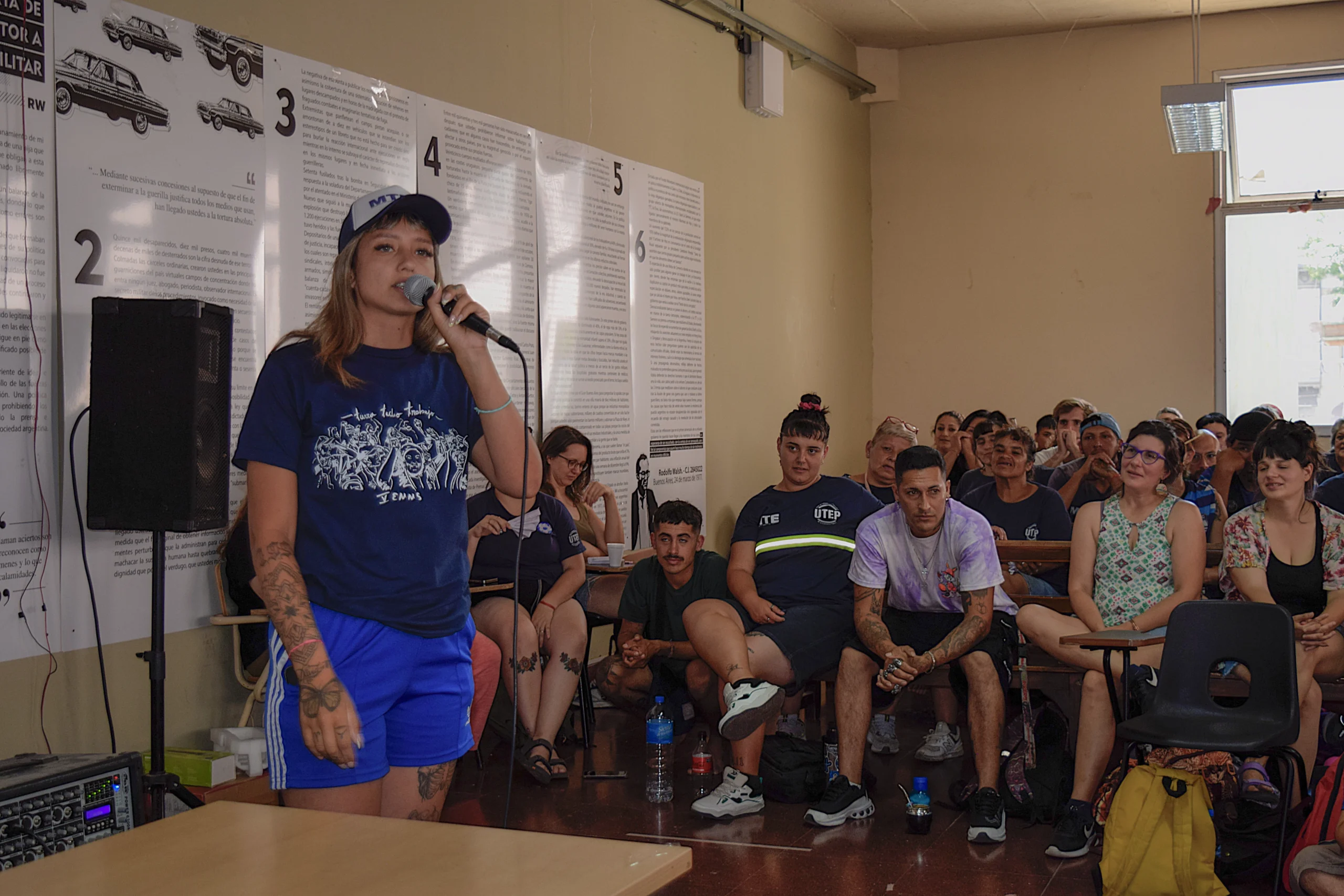
Rocio Malen Jara at the Universidad Nacional de La Plata, Argentina. ©MTE
It is Thursday, and the unusual storm that swept across Buenos Aires province over the previous two days has left its mark on La Plata, the city of diagonals where streets are known by numbers rather than names.
The number 86 bus pulls up at the corner of Avenida 44 and Calle 143 and waits patiently as around ten people get off.
A group gathers on the corner.
“Silvia!*” I shout.
She turns and smiles, grabbing my arm and starts walking. “Come on, come on. We don’t want to be late.”
It is the second Thursday that Silvia, 53, who is serving house arrest, has been granted permission to leave home.
She says it is the best part of her week: the hour-and-a-half journey, on two buses, to and from the MTE’s recycling and training centre.
There, she takes part in a diploma course, learns new skills and meets other people. It helps her move forward with her life.
Silvia has been serving house arrest since February 2025, while awaiting sentencing. She is accused of involvement in drug dealing after police surveillance identified her home as a suspected point of sale. She says the partner of one of her sons, who lived with her, was running the operation while Silvia worked cleaning houses in the mornings and at a security company at night.
“I was working constantly, all hours, trying to finish my house, put tiles on the floor, finish the windows. All of this has ruined my life. I’d never had any problems with the law,” she told us when we visited her.
She says her main problem is financial, the same thing everyone tells us. Unable to work or run a business she has found community in organisations such as the MTE.
“To the law, we’re nothing,” she says. “We’ve been abandoned. I only feel supported when the women from the MTE come and when I come here.”
“Here” is a huge warehouse divided into several areas.
On one side is a large recycling cooperative, with piles of cardboard and empty bottles. On the other are sewing machines, large tables and a meeting area where workshops take place.
Everyone arrives on time. Each person contributes something to the table: cakes, bread or biscuits they have made at home, flasks and mate, a bottle of juice.
For some participants, this is their only opportunity to leave the house each week. Others have already been released from prison and are rebuilding their lives. During the workshop, they discuss gender roles and the expectations placed on women and men, as well as how the lives of women living under arrest and those who are free are different.
“This is a really complete space. You have people who have been through the same thing as you, so they know how to support you,” says Abril Quintros, 21, whose mother spent time in prison and later served house arrest. Both now take part in the programme.
The women share their experiences. They talk about the impact of cuts to social programmes and the economic situation, the growing influence of drug gangs in their neighbourhoods, how dealers are now also acting as lenders, and how everybody is borrowing money to buy food.
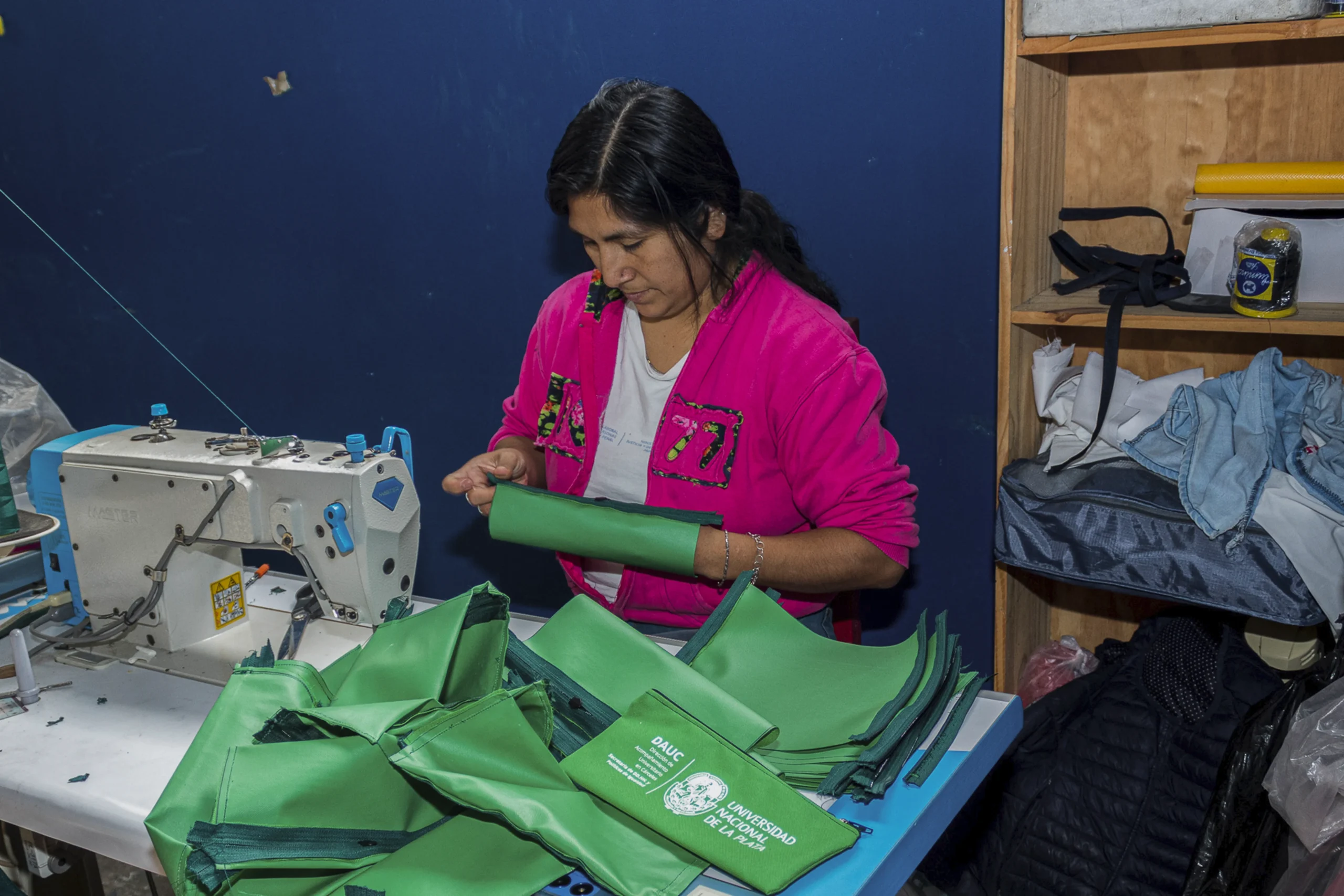
Women from marginalized areas find work opportunities in cooperatives such as the one from the Movimiento de Trabajadores Excluidos ©Patricio A. Cabezas.
Organisations such as the MTE and Esquina Libertad, a graphic and audiovisual production cooperative working with people who are currently incarcerated or spent time in prison, say the economic downturn is wreaking havoc on their productive projects.
“Milei says people need to rebuild themselves economically, but sales and production have fallen dramatically. How does he expect us to rebuild ourselves in this environment? We’re always reinventing ourselves, but for some time now everything has been incredibly difficult,” says Ayelen Stoker, one of Esquina Libertad’s founders.
Stoker says the problem is that the government does not see the value of investing resources in people who have been in prison, even though experience shows that when educational and employment opportunities are available, reoffending rates fall.
Like the MTE, Esquina Libertad provides support on the ground to people serving house arrest or recently released from prison, helping them navigate both the consequences of state abandonment and the growing reach of organisations controlling the local drug trade.
“The situation in the neighbourhoods is very bad. Very, very bad. We keep seeing drug gangs occupying the spaces that the state is leaving behind, more and more. In these neighbourhoods, the state only shows up to criminalise people. It offers nothing other than prison, and that’s terrible when, in the current situation, selling drugs can look like the only option for many people, even if it’s a bad one,” Stoker says.
Rocío Malen Jara, 28, who experienced house arrest, is part of the MTE and works in the University of La Plata’s prison university-support programme. She describes the arrival of drug gangs as the state withdraws as a vicious cycle.
“When the drug gangs find out you’re back in the neighbourhood, even if you’re under house arrest, they come and offer you a bag of drugs to sell so you can support your kids and feed them. And when women are desperate, many of them get drawn back into it. That’s why women need to be able to leave the house to go to a workshop, to go to a cooperative and work,” Rocio says.
In La Plata, Mariana, who was given permission to attend the workshop, listens carefully and takes notes, sharing her own experiences.
“I want to find a stable job so I can keep raising my daughter and give her the best. I don’t want to go back to doing what I was doing just to survive. I want to focus on working, on having a place of my own with my daughter one day, on trying to build a better life,” she says.
“I want my daughter to see a different side of me,” she tells us, as she walks towards the bus that will take her to her prison-home, until she is allowed back out.
* Some names were changed to protect people’s security.
A shortened version of this report was published in El País.
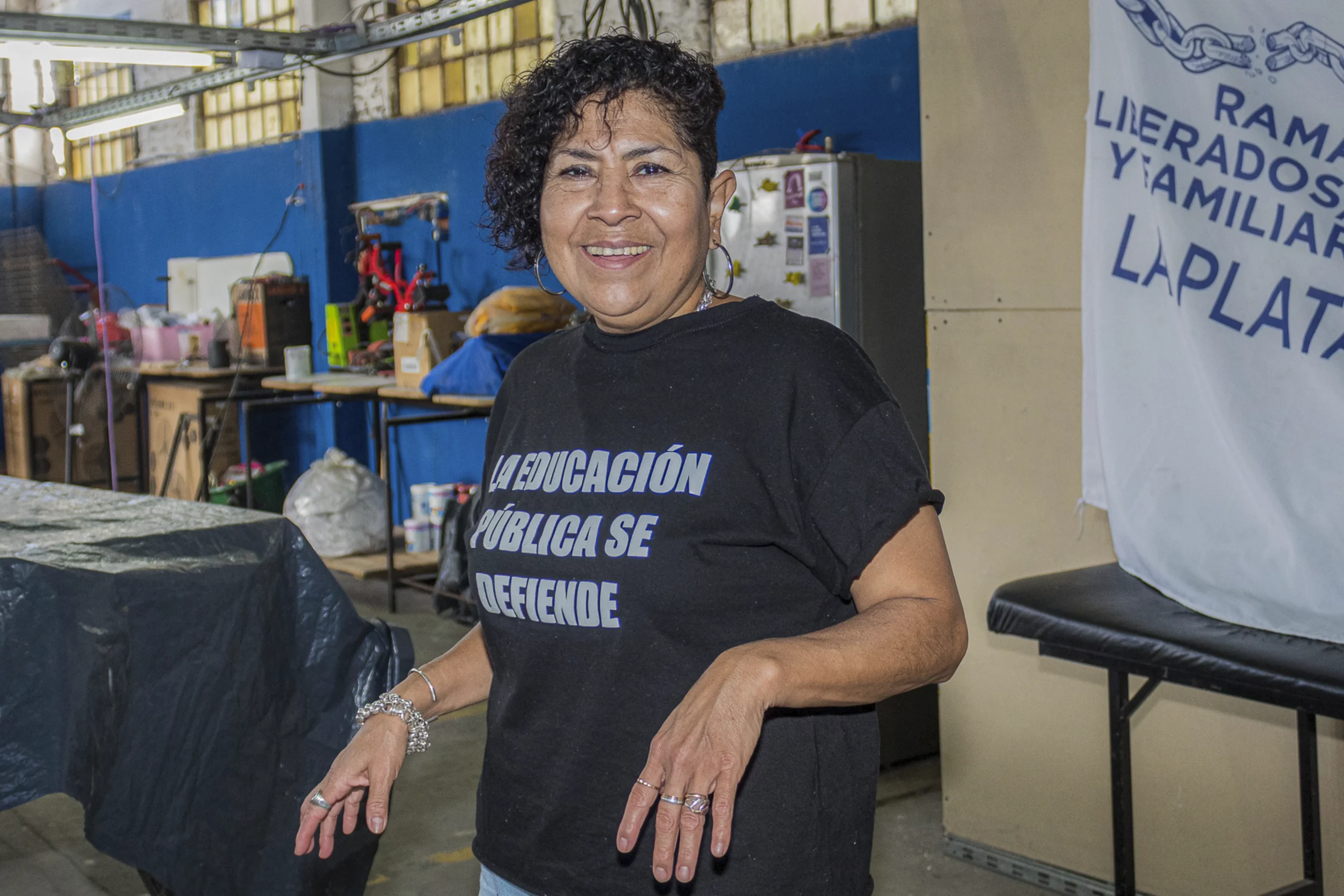
Amarilis Alayo del Movimiento de Trabajadores Excluidos en su centro de trabajo y capacitación en La Plata, Argentina. Mayo 2026 ©Patricio A. Cabezas
